Unprecedented: Chinese scientists use gene therapy to let congenitally deaf mice hear whispers
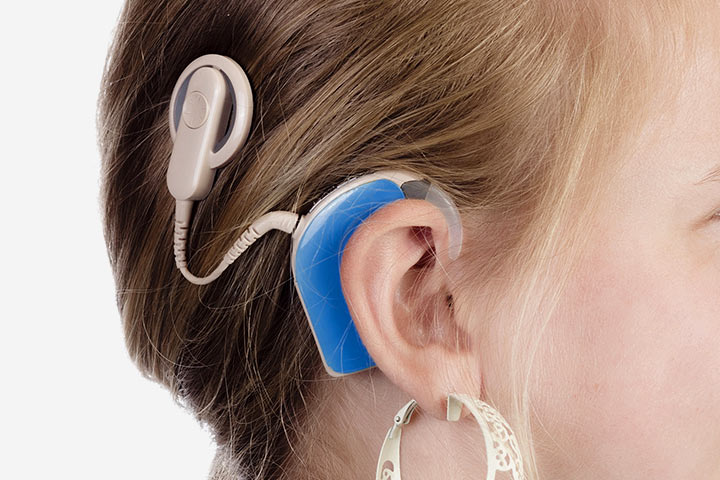
In China, on average 2-3 out of every 1,000 newborns suffer from inherited congenital deafness. This gene-level disease has long lacked a good treatment: patients either rely on hearing aids and cochlear implants, or slowly adapt to this "silent life". But with the rise of gene therapy, these patients with congenital deafness may one day regain the ability to "capture sound"!
In yesterday's issue of Nature Biotechnology, researchers from Harvard Medical School and Boston Children's Hospital published two articles. They used a synthetic viral vector to carry a therapeutic gene into the ears of mice, and the treated mice's hearing recovered to the level of hearing 25 decibels [1,2]! What does 25 decibels mean? It is roughly the volume of a person speaking to you in a whisper next to your ear, which is an enormous step forward!
Although inherited congenital deafness sounds like a single disease, genetically, scientists have discovered more than 100 genes related to it, each representing different types of deafness. In this study, the researchers chose mice deafened by a mutation in the Ush1c gene, a type that accounts for more than half of all cases. Mutation of the Ush1c gene causes a protein called harmonin to lose function, which in turn damages the hair cells of the ear that are supposed to receive sound and transmit sound signals to the brain, resulting in severe hearing damage.
In this study, the researchers used a synthetic adeno-associated virus vector, code-named Anc80L65. AAV vectors are stable, highly safe and strongly targeted, and are a commonly used type of viral vector in gene therapy. Why choose a synthetic one? Are natural AAV vectors not good enough? This goes back to research they did in 2015.
In July 2015, researchers from the two institutions had collaborated, choosing mice deafened by a mutation in the TMC1 gene, and used the conventional natural AAV1 vector [3]. AAV1 had been used in gene therapy for blindness, heart disease and other fields, with a certain safety record. The study found that the deaf mice recovered primary hearing within 2 months. But both the corresponding author, Professor Jeffrey Holt, and Dr. Margaret Kenna, who did not participate in the study, said that their treatment was more of an auxiliary effect for these inherited, profound forms of deafness, that the treatment effect was not good enough, and that much remained to be improved.
The researchers found that the AAV1 vector can only deliver genes into inner hair cells. As mentioned earlier, the function of ear hair cells is to receive sound and transmit sound signals to the brain. Ear hair cells are divided into outer hair cells and inner hair cells. When there is external sound, the sound enters through the external ear canal, passes through the eardrum and reaches the cochlea (part of the inner ear, the other part being the vestibule). At this point the hair cells in the inner ear play an important role: the outer hair cells sense the sound signal, while the inner hair cells convert the sound signal into bioelectric signals and transmit them to the brain through the auditory nerve. Therefore, when the ear hair cells are damaged, hearing impairment naturally appears.
So delivering the gene only into inner hair cells for expression is not enough; for hearing to fully recover to normal, the outer hair cells also need normal genes. However, outer hair cells are less uniformly distributed than inner hair cells, and it is relatively difficult for the vector to target and enter them. Therefore, the researchers chose the synthetic viral vector Anc80L65; studies have proven that Anc80L65 is safe and effective for transgene delivery to the liver and retina [4].
The study was led by Professor Holt and his colleagues. They compared the transduction efficiency of Anc80L65-carried genes with several conventional vectors (AAV1, 2, 6, 8, 9). The results showed that when Anc80L65 was used as the vector, its safety was almost the same as conventional vectors, but its transduction efficiency reached 100% for inner hair cells and about 90% for outer hair cells, a ratio ranging from 3 to 20 times that of other conventional vectors [1].
After confirming safety and efficacy, in vivo experiments in another group of mice were carried out immediately. The two studies share a first author: Dr. Pan Bifeng, a postdoctoral fellow in Professor Holt's laboratory, who graduated from Beijing Institute of Technology and joined Holt's laboratory in November 2011. They chose completely deaf mice shortly after birth. After treatment, the researchers found that the mice's harmonin protein returned to normal function, and the ear hair cells grew normally, forming the same cell bundles as normal mice; when there were sound waves, signal transmission also returned to normal [2].
The researchers also performed behavioral tests, placing the mice in a "startle box". When a loud sound rang out, all the treated mice "jumped up" like normal mice. When the researchers lowered the sound volume, 19 of 25 mice responded to sounds below 80 decibels, and fewer than half could hear sounds of 25-30 decibels. The corresponding author, Dr. Gwenaëlle Géléoc of the Department of Otolaryngology at Boston Children's Hospital, said: "This means we can 'whisper' to them, and they can hear."
In addition to hearing, patients (mice) with Ush1c mutations often also suffer from symptoms such as dizziness and unsteady gait, caused by vestibular dysfunction. The researchers also observed the recovery of these disorders, and found that the mice did overcome both problems and could easily "walk a straight line"! In another test, they could stay on a rotating bar without falling, just like healthy mice.
In the study, the researchers found that treatment was very effective for mice treated shortly after birth, but when treatment was delayed by 10-12 days, the effect became very poor. The researchers hope to explore the reason for this phenomenon in future research. In addition, they said they hope to treat larger animals in the future to verify the effectiveness of the therapy.
Dr. Holt said of these results: this is a landmark study; they demonstrated for the first time that delivering the correct gene into the hair cells of the inner ear can restore the hearing and balance of deaf mice to relatively normal levels. In the future, they will continue to work on developing new therapies for different types of congenital deafness. (July 2017) [Source: This article is an original article by GeekHeal (WeChat official account: geekheal_com).] References: [1] A synthetic AAV vector enables safe and efficient gene transfer to the mammalian inner ear [2] Gene therapy restores auditory and vestibular function in a mouse model of Usher syndrome type 1c [3] Askew C, Rochat C, Pan B, et al. Tmc gene therapy restores auditory function in deaf mice[J]. Science Translational Medicine, 2015, 7(295): 295ra108-295ra108. [4] Zinn, E. et al. In silico reconstruction of the viral evolutionary lineage yields a potent gene therapy vector. Cell Rep. 12, 1056-1068 (2015).

About Reforgene
Reforgene Medicine is one of China's leading innovative gene editing drug companies, driven by gene editing technology and dedicated to bringing novel medicines to life. The company has pipeline programs across genetic diseases and complex diseases. Its innovative beta-thalassemia medicine has achieved globally leading clinical progress, and it achieved the world's first cure of an alpha-thalassemia patient.
Media Contact
info@reforgene.com · BD@reforgene.com