
More than 7,000 rare diseases, most genetic in origin
More than 7,000 rare diseases have been reported worldwide. Approximately 80% are genetic in origin, most caused by mutations in a single gene, and the list continues to grow. Unlike common diseases, genetic disorders are often lifelong, and about 70% begin in childhood.
Yet the vast majority still lack approved therapies; existing treatments mostly relieve symptoms without addressing the underlying cause. Gene editing and related genetic medicines can correct disease-causing mutations at the level of DNA, offering the prospect of a one-time treatment with durable benefit.
We have made a series of breakthroughs in genetic diseases of the blood and the eye, and will continue to advance the development and translation of gene-editing medicines, hoping to bring this technology to more patients.
Thalassemia
Among these diseases, thalassemia is an inherited blood disease, and it is the monogenic disease with the widest global impact and the largest affected population. Patients have abnormal hemoglobin and insufficient functional hemoglobin, causing anemia and a range of clinical symptoms that accumulate across organs and can even be life-threatening.
Thalassemia is divided into two major types: alpha-thalassemia and beta-thalassemia. In the former, at least one alpha-globin gene is defective; in the latter, the HBB gene encoding beta-globin carries mutations. For beta-thalassemia, the mutation types are diverse, totaling more than two hundred, and lead to symptoms of varying severity.
Thalassemia is widely distributed. WHO statistics from 2001 indicate that about 270 million people worldwide carry hemoglobin gene mutations, with 300,000 to 400,000 infants born each year with severe thalassemia or sickle cell anemia. The disease occurs in Mediterranean countries, Africa and Asia, and migration from these regions has further spread it.
According to the Blue Book on the Prevention and Treatment of Thalassemia in China (2015), China has about 300,000 patients with severe or intermediate thalassemia, increasing each year, and more than 30 million thalassemia gene carriers, affecting nearly 30 million families and 100 million people. Thalassemia is distributed in Guangdong, Guangxi, Hainan, Chongqing, Sichuan, Guizhou, Yunnan and other regions. The situation in South China is particularly serious, with a carrier rate of 11% in Guangdong and 24% in Guangxi.
Symptoms of thalassemia may vary. Some of the most common include bone deformity, enlarged spleen, delayed development, excessive fatigue, yellowish or pale skin, transfusion-related iron overload and excessive iron absorption. Patients with severe thalassemia suffer a seriously reduced quality of life, multi-organ damage, and a significantly shortened life expectancy.
Conventional treatment for thalassemia includes regular blood transfusions and iron chelation. Allogeneic hematopoietic stem cell transplantation can currently cure patients with severe thalassemia, but due to issues such as HLA matching and post-transplant immune rejection, only a small proportion of patients receive transplants.
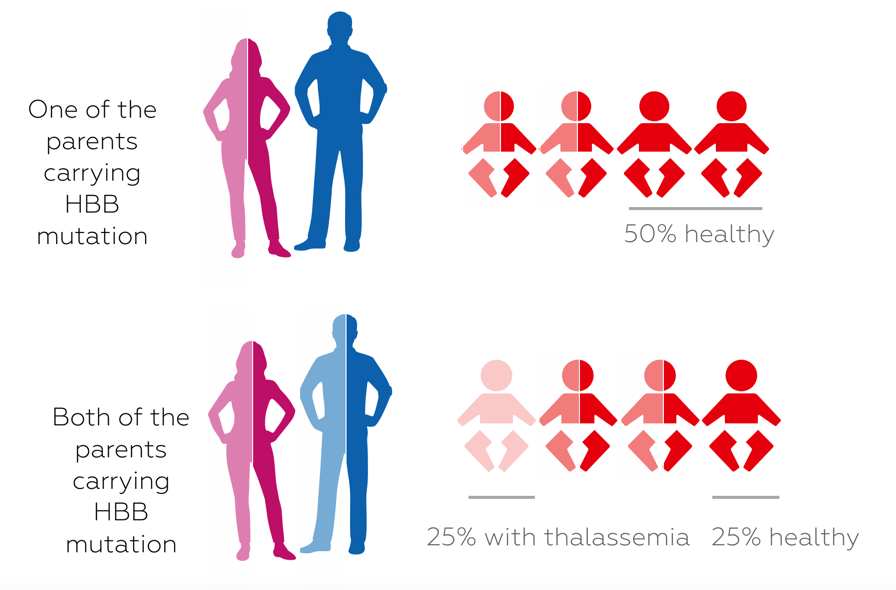
Inheritance of thalassemia when one or both parents carry an HBB gene mutation