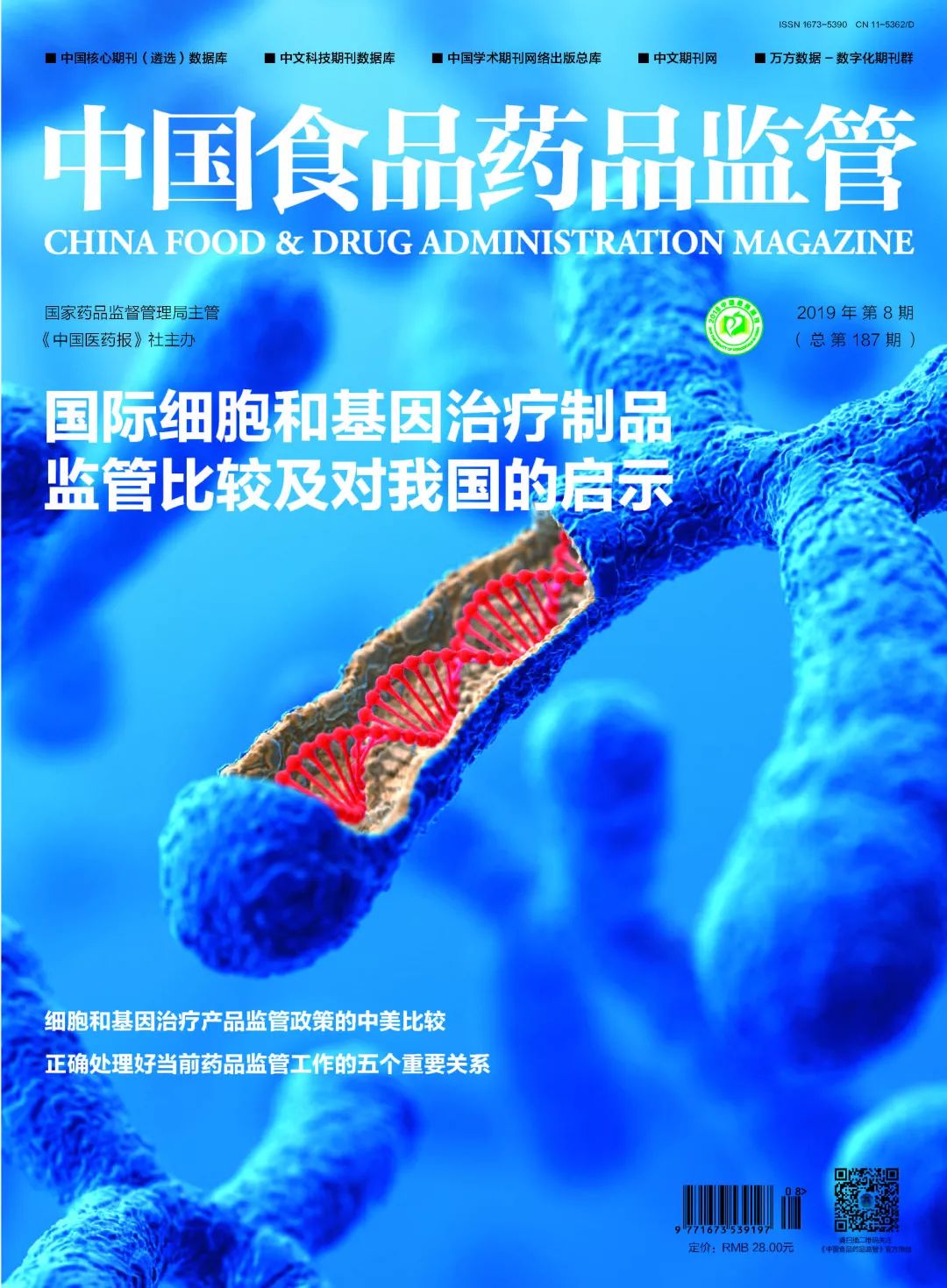
Comparing international regulation of cell and gene therapy products and implications for China
Biologic therapy is a new treatment modality formed by the intersection and integration of multiple disciplines including modern biotechnology, genetic engineering, molecular biology, medical genetics and clinical medicine, used to treat major refractory diseases in humans, including cell therapy and gene therapy. With the continuous development of science and technology and biotechnology, people have begun to use biotechnology with larger molecules and more complex structures for disease treatment, and today cells have become an important therapeutic "drug" [1]. Cell and gene therapy increasingly shows good prospects in the treatment of major refractory diseases such as malignant tumors, infectious diseases and autoimmune diseases, becoming another important means of human disease intervention. Over the past decade, a series of breakthrough advances have been made internationally in applied research on cell and gene therapy, and related industries are thriving. In particular, in 2017, the U.S. Food and Drug Administration (FDA) approved two CAR-T (Chimeric antigen receptor-T) cell therapy products, and multiple immunocyte therapy products have been approved internationally since then, triggering an R&D boom in cell and gene therapy at home and abroad, and gradually forming a global emerging industry cluster [2-5].
Looking back at the history of cell and gene therapy development in China, amid the ongoing debate over whether cell therapy should be treated as a technology or a product, its basic research and clinical translation and application have accumulated certain experience, and a number of relevant normative documents and industry guidelines have been issued and implemented, but a complete regulatory policy system has not yet been formed in this field. As an emerging industry, from the perspective of full-chain, full-life-cycle management spanning basic research, product development, approval and market launch, market access and clinical application, cell and gene therapy development still faces many challenges. Therefore, on the basis of deeply understanding the characteristics of cell and gene therapy products, comprehensively understanding the current state of industry development and the problems that may be encountered now and in the future, clarifying regulatory thinking, issuing forward-looking cell and gene therapy regulatory policies, and formulating scientific and effective implementation paths are of great significance for promoting industrial development and meeting the clinical treatment needs of the public and patients for emerging therapeutic products.
This article comprehensively analyzes the current state of China's cell and gene therapy industry, summarizes the main problems and challenges facing the field, and horizontally reviews the regulatory policy systems and characteristics of cell and gene therapy in other countries and regions as well as in China, putting forward recommendations for further clarifying the regulatory path suited to China's national conditions and exploring the establishment and gradual improvement of a scientific regulatory policy system suited to national conditions and with Chinese characteristics.
I. Current state of cell and gene therapy R&D at home and abroad
In recent years, with the continuous development of molecular biology, genetic engineering and gene editing technologies, breakthrough progress has been made in both basic and clinical research in cell and gene therapy, with a rapidly advancing pace of development.
Cell therapy refers to the treatment method of applying human autologous, allogeneic or xenogeneic (non-human) cells, which are reinfused (or implanted) into the human body after ex vivo manipulation. Such ex vivo manipulation includes passaging, expansion and screening of cells in vitro, as well as the administration of drugs or other treatments that can alter the biological behavior of cells. Cells after ex vivo manipulation can be used for disease treatment [6]. The most common are immunocyte therapy and stem cell therapy. Immunocyte therapy mainly includes dendritic cells (DC), natural killer cells (NK cells), T cells activated and induced by various cytokine strategies (such as CIK), and genetically modified T cells (CAR-T cells and TCR-T cells). Stem cell therapy includes embryonic stem cells, mesenchymal stem cells and induced pluripotent stem cells (iPS cells). As of April 2019, about 32,740 clinical trials of cell therapy products worldwide were registered on the U.S. clinicaltrials.gov website, and a total of 48 cell therapy products have been marketed in the United States, South Korea, Switzerland and other countries. Globally, 7 immunocyte products and 17 stem cell products have been approved for marketing. In China, 4,122 clinical studies of cell therapy products have been conducted, accounting for about 12% of the global total, with no product yet approved for marketing in China.
Gene therapy refers to medical treatment based on altering the genetic material of cells. The technologies and methods of gene therapy are increasingly diverse. By the form of gene introduction, it is divided into ex vivo and in vivo forms. The former introduces genes into cells in vitro and then injects the cells into the human body; its product form is cells transformed by exogenous genes, suitable for implementation in medical institutions with specialized technical personnel and conditions. The latter directly introduces genes into the human body through appropriate introduction systems, including viral and non-viral vector methods; its product form is viruses modified by genetic engineering technology, or recombinant DNA, RNA and other genetic materials and their complexes (mixtures) [7]. Broadly speaking, any treatment that introduces exogenous genes (DNA or RNA) and exerts corresponding functions belongs to gene therapy. In the field of gene therapy, about 40 countries, mainly in North America, Europe and East Asia, are conducting clinical research on malignant tumors, monogenic genetic diseases, infectious diseases and cardiovascular diseases. As of April 2019, 3,869 clinical trials were registered on the U.S. clinicaltrials.gov website, and 12 products have been marketed in China, the EU and the United States. In China, 459 trials have been conducted, accounting for about 11% of the global total, with 2 products approved for marketing in China.
II. Comparison of cell and gene therapy regulatory systems in representative countries/regions
Compared with traditional drugs, cell and gene therapy products are characterized by high R&D technical content, rapid technological iteration, short product validity, many preparation operation steps, difficult and stringent quality control, high degree of personalization, and high requirements for clinician coordination, which impose higher requirements and new challenges on enterprises, medical institutions and regulators.
Because the technology is new and updates rapidly, the industry's understanding of cell and gene therapy is also continuously accumulating. Countries and regions are continuously improving and refining their regulatory policy systems for cell and gene therapy products, and the industry is also gradually advancing and standardizing [8]. Due to differences in national conditions and circumstances such as culture, economy, geography and legal systems, the structures and functions of health administration and drug regulatory systems differ across countries and regions. However, from the perspective of approval and clinical application, they can generally be divided into two types of regulatory model paths: one is supervision by the drug regulatory authority, managed by risk classification, with the United States, the EU, Germany, Canada, Singapore and South Korea as typical representatives; the other is review and approval by the health administration for clinical application in medical institutions, while marketed products are managed as drugs, with Japan as a typical representative. This article selects the representative regulatory systems of the United States, the EU and Japan for a brief introduction [9-14].
(1) United States
1. Regulatory organizational structure. The FDA's Center for Biologics Evaluation and Research (CBER) is responsible for biological products and related products such as blood, vaccines, cell therapy, gene therapy and tissues. In 2016, the FDA reorganized the former Office of Cellular, Tissue and Gene Therapies into the Office of Tissue and Advanced Therapies (OTAT), responsible for cell, gene and tissue therapy products.
2. Legal and regulatory system. (1) Overall framework. The United States has formed a relatively complete regulatory framework for cell and gene therapy consisting of three layers: laws, regulations, and management systems and guidelines. At the legal level, the Federal Food, Drug, and Cosmetic Act (FD&C Act) and the Public Health Service Act (PHS Act) are the main legal bases for the management of cell therapy products. Title 21 of the Code of Federal Regulations (CFR) contains food and drug related regulations, of which 21 CFR Part 1271, the regulations on human cells, tissues, and cellular and tissue-based products, included in 2005 [8], is the main regulatory basis for the approval of cell therapy products. One of its most important contents is the division of human cells and tissues into PHS 351 products and PHS 361 products for management. For gene therapy, the United States has not specifically formulated a complete set of laws and regulations, but incorporates gene therapy into the drug management regulatory system. In 1997, the United States successively amended the Public Health Service Act and the Federal Food, Drug, and Cosmetic Act, formally incorporating gene therapy into the drug management regulatory framework, and adopted a management model combining laws with advisory bodies or committees. In addition, the FDA has communicated with other management departments, enterprises and research institutions in the cell and gene therapy field, forming a series of guidelines and specifications on biological product preparation, quality control and clinical trials, and has successively issued more than 30 related regulations and technical guidelines.
Based on the principle of risk management, the Public Health Service Act divides human cells and tissues into low-risk products (PHS Act Section 351) and high-risk products (PHS Act Section 361) for management. Low-risk products do not adopt the drug regulatory model; they only need to register their cell product establishments and products with the FDA, do not require premarket evaluation, and are subject to periodic FDA inspection. High-risk cell therapies and gene therapy products are treated as biologics: in addition to establishment and product registration, they must follow drug management requirements and submit an Investigational New Drug (IND) application and a Biologics License Application (BLA) to the FDA.
According to the principle of risk classification, whether a cell/tissue product needs to be managed as a drug depends on whether it meets the situations defined by Section 361 of the PHS Act; any product with even minimal manipulation factors is strictly managed as a drug (Table 1). Therefore, some tissues that have not undergone ex vivo manipulation are listed as not requiring drug/biological product management, while cells, even if merely cultured (such as chondrocytes), are considered not "simple" manipulation and need to be managed under the FDA drug management model.
In 2018, the FDA issued two guidances, of which "Regulatory Considerations for Human Cells, Tissues, and Cellular and Tissue-Based Products: Minimal Manipulation and Homologous Use" more clearly defined the meanings of "minimal manipulation" and "homologous use" in regulatory documents, explaining the regulatory requirements to stakeholders. The guidance clearly sets out the following special cases applicable to PHS Act Section 361, i.e., not requiring drug management: (i) used solely for non-clinical or educational purposes; (ii) removal and reimplantation of a human cell or tissue product into the same individual during the same surgical procedure; (iii) as a carrier, receiving, accepting, transporting or delivering human cell and tissue products in the ordinary course of business; (iv) not involving recovery, screening, testing, processing, labeling, packaging or distribution of human cell and tissue products, but accepting or storing them for implantation, transplantation, infusion or transfer use only within the establishment; (v) recovering reproductive cells or tissues only and immediately transferring them to the partner of the cell or tissue donor; (vi) where an individual is bound by a contract, agreement or other arrangement with a registered establishment, organization or institution, and only engages in cell or tissue recovery and returning the recovered cells or tissues to the registered establishment, organization or institution, the individual does not need to separately register and list the human cell and tissue products handled.
(2) IND and exemptions. In principle, products that do not meet the conditions defined by PHS Act Section 361 must submit an IND application to the FDA before human use. It should be noted that the FDA defines three categories of IND. (i) Investigator IND: research initiated by a physician, who uses or distributes the investigational drug under his or her direct guidance. A physician may submit an investigator IND to propose studying an unapproved drug, or using an approved product for a new indication or in a new patient population. (ii) Emergency use IND: the FDA allows authorization of the use of an investigational drug in emergency situations, for patients who do not meet the criteria of existing research protocols, or when no approved research protocol exists. (iii) Treatment IND: registration applications for investigational drugs that are likely to benefit serious or immediately life-threatening conditions during clinical testing, and whose research protocols have been reviewed by the FDA.
21 CFR explains the circumstances for IND exemptions. The sponsor may request an IND exemption from the FDA. The exemption request may be submitted in the IND or in an IND information amendment. In emergency situations, the request may be made by telephone or other rapid communication means. The exemption request must contain at least one of the following: (i) an explanation of why the sponsor does not need or cannot meet the requirement; (ii) an alternative application or action plan that meets the purpose; or (iii) other materials demonstrating the exemption. The FDA may grant an exemption if waiving the IND would not pose a significant and unreasonable risk to subjects participating in the research, and one of the following conditions is met: (i) the sponsor is not required to strictly comply with the requirements when evaluating the application, or cannot achieve compliance; (ii) the alternative proposed by the sponsor meets the requirements; or (iii) the applicant's application can also justify the exemption.
(3) New developments in U.S. cell and gene therapy regulatory policy. In 2017, the FDA officially issued a comprehensive policy framework for regenerative medicine, the "Comprehensive Policy Framework for Regenerative Medicine", covering multiple strategies to accelerate product development, including the Regenerative Medicine Advanced Therapies (RMAT) designation. In February 2019, the FDA issued "Expedited Programs for Regenerative Medicine Therapies for Serious Conditions" and "Evaluation of Devices Used with Regenerative Medicine Advanced Therapies" [15]. According to the above guidances, regenerative medicine advanced therapies include cell therapies, therapeutic tissue engineering products, human cell and tissue products, and any combination products using these therapies or products. The FDA noted that gene therapy is included in this definition. To date, the FDA has granted RMAT designation to products including Abeona's E-101, a gene-corrected autologous cell product for recessive dystrophic epidermolysis bullosa, and Rocket Pharmaceuticals' lentiviral vector (LVV)-based gene therapy product for Fanconi anemia.
In 2018, the FDA continued to improve the policy document system for gene therapy R&D and regulation, updating 3 guidance documents and newly issuing gene therapy guidances for 3 specific areas: hemophilia, retinal diseases and rare diseases, aiming to promote the development of gene therapy products [16]. At the same time, in addition to the previous R&D and clinical trial related guiding principles, 3 guiding principles on the production of gene therapy products were updated: "Human Gene Therapy Investigational New Drug (IND) Applications", chemistry, manufacturing and control (CMC) related requirements.
(2) European Union
The EU manages cell and gene therapy products under the advanced therapy medicinal products (ATMPs) framework. The EU issued Directive 2001/83/EC and Regulation (EC) No 726/2004, specifying the production requirements, technical requirements, procedures for market approval and clinical trial requirements for such products. In 2004, Directive 2004/23/EC on quality and safety standards for the donation, procurement, testing, processing, preservation, storage and distribution of human tissues and cells was issued. In 2007, on the basis of consolidating previous regulations, Regulation (EC) No 1394/2007 on advanced therapy medicinal products was issued, and the Committee for Advanced Therapies (CAT) was established, responsible for the supervision and consultation of ATMPs, with its work formally implemented on December 30, 2008. In September 2008, the "Guideline on Human Cell-based Medicinal Products" was announced, replacing the "Points to Consider on the Manufacture and Quality Control of Somatic Cell Medicinal Products" issued in 2001. Cell and gene therapy products are filed as drugs and reviewed by the CAT, a multidisciplinary committee under the EMA; the review opinion is submitted to the Committee for Medicinal Products for Human Use (CHMP) for a final recommendation, ultimately recommending EMA approval.
It is worth noting that the Regulation on advanced therapy medicinal products includes a "hospital exemption" clause, allowing physicians to treat individual patients after safety and efficacy have been verified, mainly limited to individualized cell therapy performed in medical institutions. The exemption needs to be incorporated into the relevant medical regulations of each EU member state before implementation. At present, the UK and Germany have incorporated it into their regulatory systems, but many countries have not yet completed the revision of regulations.
In March 2016, the EMA launched the PRIME scheme to accelerate the review process for medicines in areas of unmet medical need. Although PRIME overlaps somewhat with the FDA's breakthrough therapy designation (BTD), there are still differences. Candidate drugs entering PRIME are at a lower degree of clinical research but with higher innovativeness. For example, if academic institutions or small and medium-sized pharmaceutical enterprises achieve outstanding data in preclinical research and drug tolerance trials, they have a better chance of early entry into the PRIME scheme. Once PRIME designation is obtained, the EMA will take a series of measures to continuously communicate and follow up with the development enterprise. In April 2019, the BCMA-targeted CAR-T cell therapy for multiple myeloma jointly developed by Nanjing Legend Biotech and Janssen Pharmaceuticals, a subsidiary of Johnson & Johnson, obtained PRIME designation.
(3) Japan
In recent years, the Japanese government has implemented a national strategy, successively revising and issuing new regulations on regenerative medicine and establishing efficient channels to promote the clinical translation of cell and biological technologies, to ensure Japan's research and clinical treatment advantages in regenerative medicine. Japan separately supervises cell therapy, gene therapy and tissue engineering products as regenerative medicine products, independent of drugs and medical devices, and in 2013 revised the Pharmaceutical Affairs Law, renaming it the Act on Securing Quality, Efficacy and Safety of Pharmaceuticals, Medical Devices and Other Products, implemented in November 2014, with an added section on the supervision of regenerative medicine products. In 2013 and 2014, the Act on Promotion of Regenerative Medicine and the Act on the Safety of Regenerative Medicine were successively issued, providing a legal basis for related products from R&D to clinical application. Since the formal implementation of the new legal framework in November 2014, more enterprises and research institutions have entered the regenerative medicine field, and the regenerative medicine industry has entered an active period.
The main national regulatory ministries and agencies for regenerative medicine in Japan include the Ministry of Health, Labour and Welfare, the Ministry of Economy, Trade and Industry, the Ministry of Education, Culture, Sports, Science and Technology, and the Pharmaceuticals and Medical Devices Agency. The four agencies have their own focus and division of labor in specific matters such as research promotion, design and development, licensing and certification, quality evaluation and procedure review. In addition, the Japanese Standards Association (JSA) is responsible for the formulation of industry standards such as safety evaluation.
Japan implements a dual-track management of cell and gene therapy products. Overall, immunocyte collection and treatment implemented only within clinics or hospitals, and investigator-initiated clinical trials, fall under the Act on the Safety of Regenerative Medicine, managed and filed by the Ministry of Health, Labour and Welfare (MHLW). Cell therapy products intended for marketing, or where third-party enterprises are involved in the genetic manipulation, processing and preparation, production and sales of immunocytes, are managed by the Pharmaceuticals and Medical Device Agency (PMDA) in accordance with the revised Pharmaceutical Affairs Law.
Cell therapy implemented by MHLW in medical institutions is regulated under the Act on the Safety of Regenerative Medicine, with the regulatory scope including cell therapy technologies whose safety and efficacy have not been verified. Before 2010, cell therapy could only be carried out in medical institutions with cell preparation capabilities; after 2010, it was allowed to provide cell therapy products to other medical institutions without such capabilities for use in their patients. At present, 40 research centers have obtained cell therapy qualifications and approvals, mainly for investigator-conducted clinical research and cell therapy applications similar to the EU "hospital exemption".
Under the Act on the Safety of Regenerative Medicine, Japan's cell and gene therapy products are filed according to three risk levels: products never used in humans, such as iPS cells, embryonic stem cells and autologous or allogeneic cells with introduced exogenous genes, belong to the first-level high-risk products; products already used in humans, such as autologous mesenchymal stem cells, belong to the second-level medium-risk products; autologous cell tumor immunotherapy belongs to the third-level low-risk products.
Medical institutions, based on the risk classification, establish research plans and implementation schemes and submit applications to MHLW, which sets different approval procedures according to the different potential risks that different cell therapies pose to patients. A regenerative medicine committee review is organized according to risk level, and the evaluation results take into account the opinions of the health science council.
Japan's regenerative medicine products are regulated by PMDA under the Act on Pharmaceuticals, Medical Devices and Other Products, with the Cell and Tissue Product Approval Office under its evaluation center responsible for specific approval matters. Regenerative medicine products must meet the following conditions: the indication is a life-threatening disease, the treatment method is an innovative product that meets needs, and it has passed preliminary safety and efficacy verification and complies with relevant regulatory requirements. On the basis of the original 9-month review procedure for drugs, regenerative medicine products, after clinical research has confirmed their safety and efficacy, are granted conditional and time-limited marketing authorization. The clinical and marketing approval cycle of regenerative medicine products has been greatly accelerated. The conditional time-limited authorization is valid for up to 7 years; after the effectiveness of the cell therapy product is proven in clinical trials and application, the product may apply for formal approval and marketing as a regenerative medicine product. After the 7-year period expires, the enterprise may apply again or withdraw from the market. During this period, PMDA and MHLW have the right to terminate the clinical application of the product to ensure that ineffective products do not remain on the market. At present, one skeletal muscle cell product for severe heart failure caused by ischemic heart disease has obtained conditional time-limited authorization to enter the market, with an inspection period of 5 years.
Japan has also issued a series of research guidelines and specifications, including the "Guidelines for Clinical Research Using Human Stem Cells", "Guidelines for Quality Control and Safety of Human Autologous Cell and Tissue Products" and "Principles for Cell and Tissue Manipulation". The Japanese government is currently also considering legislation on the supervision of cell therapy, establishing a hierarchical management system and formulating different levels of management measures for induced pluripotent stem cells, mesenchymal stem cells and immunocyte therapies.
III. Comparison of international regulatory systems for cell and gene therapy products and implications for establishing China's regulatory system
Regarding the regulation of cell and gene therapy products, whether it is the United States and the EU, which lead the world in scientific research and industrial development, or Asian countries such as Japan and South Korea that already have marketed cell and gene therapy products, all have continuously improved and refined their systems from the perspectives of laws, regulations and technical guidelines, initially establishing relatively complete regulatory frameworks. Whether the single-track model represented by the United States or the dual-track model represented by Japan, both, on the basis of fully understanding the characteristics and risks of cell and gene therapy products, comprehensively considered factors such as basic national conditions, economy, culture, scientific and technological development and industrial strategic layout, determined the top-level framework, and implemented hierarchical and classified management through a policy system spanning laws, regulations and industry guidelines, continuously improving related technologies and effectively promoting industrial upgrading (Table 2).
China's basic research and clinical trials in cell and gene therapy started relatively early, having gone through multiple stages and explorations of various models. In 1993, the former Ministry of Health issued the "Quality Control Points for Clinical Research on Human Somatic Cell Therapy and Gene Therapy" and the "Notice on Prohibiting the Illegal Clinical Application of LAK Cell Preparations". After the establishment of the former State Drug Administration in 1998, the "Measures for the Administration of Drug Registration (Trial)" issued in 2002 managed cell therapy and gene therapy products as Class 3 therapeutic biological products. In 2009, the former Ministry of Health issued a document managing cell therapy as a Class 3 medical technology, allowing clinical application and charging. After the "Wei Zexi" incident in 2015, the former National Health and Family Planning Commission prohibited the clinical application of Class 3 medical technologies such as hematopoietic stem cells and immunocytes, while implementing filing management for stem cell clinical research [19].
In the nearly 10-year debate over whether cell therapy is a technology or a product, a total of 30 cell products were filed as drugs before 2015, of which 5 obtained clinical trial approvals. At the end of 2017, after the former China Food and Drug Administration issued the "Technical Guideline for the Research and Evaluation of Cell Therapy Products (Trial)", in just over a year, 49 cell products applied for drug registration clinical trials, of which more than 10 advanced CAR-T and TCR-T products were approved for clinical trials, marking a formalized development path for China's cell and gene therapy. In early 2019, the National Health Commission issued the "Regulations on the Clinical Application Management of New Biomedical Technologies (Draft for Comment)" and the "Measures for the Clinical Research and Translational Application Management of Somatic Cell Therapy (Draft for Comment)", again causing discussion and controversy among relevant parties at home and abroad.
According to the preliminary research of the project team, China's cell and gene therapy industry is enormous in scale. Except for the Tibet Autonomous Region, all provinces, autonomous regions and municipalities have over a thousand enterprises, medical institutions, universities and research institutes carrying out basic and clinical research in this field, involving dozens of cell types such as stem cells, immunocytes and a small number of other adult cells, with indications covering nearly a hundred refractory diseases, including major diseases such as malignant tumors, infectious diseases, autoimmune diseases and cardiovascular diseases, with enormous development space and market. The industry is developing rapidly. Since 2017 alone, 49 cell therapy products have been accepted by the national drug regulatory authority, a group of innovative enterprises with high starting points and strong R&D capabilities have emerged rapidly, and advanced foreign enterprises and industry giants have brought advanced R&D concepts into China through various capital forms, greatly improving the domestic R&D level in this field. However, the research found that there is much duplicated research, the structure of R&D varieties is relatively single, the levels of institutions conducting clinical research are uneven, the proportion of clinical research passing regulatory filing review is low, and the scientific rigor and standardization are insufficient, so the risks are relatively high.
The "13th Five-Year Plan" national strategic emerging industry development plan lists the development of gene therapy and cell therapy and the strengthening of scientific and efficient regulation and policy support as key strategic tasks to promote the leapfrog upgrading of the biomedical industry [20]. In the past 5 years, the total national scientific research funding invested in stem cells and related fields has exceeded 1 billion RMB, providing strong support for related basic research, key technologies and resource platforms. However, there are still major bottlenecks in the application translation and industrialization of the cell and gene therapy field, with no product marketed to date. Joint efforts of research institutions, the pharmaceutical industry, medical institutions and relevant government regulatory authorities are needed to research and formulate the top-level policy framework and development paths at different stages, to promote the healthy, orderly and high-quality development of China's cell and gene therapy field.
To this end, on the basis of comprehensively understanding the current state of China's cell and gene therapy industry and international development trends, and fully understanding the differences and characteristics of cell and gene therapy products compared with traditional small-molecule chemical drugs and large-molecule biological products, it is recommended that, based on the characteristics of these emerging therapeutic products, following the scientific laws of the key links of their research, development, production and use, and in combination with actual clinical use, the bottleneck problems be comprehensively sorted out, regulatory science research in this field be advanced, new methods, new standards and new paths be explored, and a scientific regulatory path and legal system suited to these products be researched and formulated, to encourage and guide scientific and standardized R&D and meet the clinical treatment needs of the public and patients for emerging therapeutic products. Based on the analysis of China's national conditions and industry status, and fully drawing on foreign regulatory systems, the project team puts forward the following recommendations for China's current cell therapy regulatory policies:
1. Clarify the regulatory system for cell and gene therapy products at the top-level design, and delineate the regulatory boundaries and functions of the NMPA and the National Health Commission. Establish a patient-centered scientific regulatory and legal system, that is, one centered on protecting patient safety and rights, based on a full-life-cycle quality system.
2. It is recommended that the design of the regulatory system fully consider the characteristics and scientific laws of products in this field, based on the basic principle of risk control, reflecting integrity while accommodating flexibility. For example, establish and improve special mechanisms for experimental treatment of terminal patients with cell and gene therapy products.
3. In the design of the regulatory system, it is recommended that, under the consideration of the overall framework and with management boundaries clarified, a mutually coordinated regulatory system be established according to relevant functions.
4. It is recommended that different categories of products be regulated by risk level, improving regulatory efficiency and effectively controlling risks.
5. Establish a special professional committee for cell and gene therapy products, providing technical support to regulators in this field and consultation for the continuous improvement of related policies, guidelines and principles.
6. Encourage the establishment of regional third-party testing institutions for cell and gene therapy products, and continuously improve the regulatory technical guideline system in this field.
7. Promote regulatory science research in this field. In addition to valuing new standards, new methods and new paths for evaluating the safety and efficacy of cell and gene therapy products, supporting policy research on clinical payment and reimbursement should also be laid out proactively.
In summary, China's cell and gene therapy industry is currently developing rapidly, and the regulatory system urgently needs improvement. How to establish a scientific, reasonable and complete regulatory policy system tests the wisdom, courage and boldness of scientists and regulators.
The data in this article are provided by the "Cell and Gene Therapy Regulatory Policy Research" project team, with project funding supported by the National Medical Products Administration.
First author introduction: Yu Ganjun, Doctor of Medicine, works in the Department of Immunology of Naval Medical University and the National Key Laboratory of Medical Immunology, research direction: tumor immunotherapy. Co-corresponding authors: Wan Tao, Doctor of Medicine, professor and doctoral supervisor of the National Key Laboratory of Medical Immunology, research direction: tumor immunotherapy and its applications; Wang Wenya, Doctor of Medicine, School of Pharmaceutical Sciences of Tsinghua University, researcher, research direction: drug regulatory science. Source: Yu Ganjun et al., China Food & Drug Administration Magazine.

About Reforgene
Reforgene Medicine is one of China's leading innovative gene editing drug companies, driven by gene editing technology and dedicated to bringing novel medicines to life. The company has pipeline programs across genetic diseases and complex diseases. Its innovative beta-thalassemia medicine has achieved globally leading clinical progress, and it achieved the world's first cure of an alpha-thalassemia patient.
Media Contact
info@reforgene.com · BD@reforgene.com