Improved CRISPR successfully targets triple-negative breast cancer with up to 77% efficacy
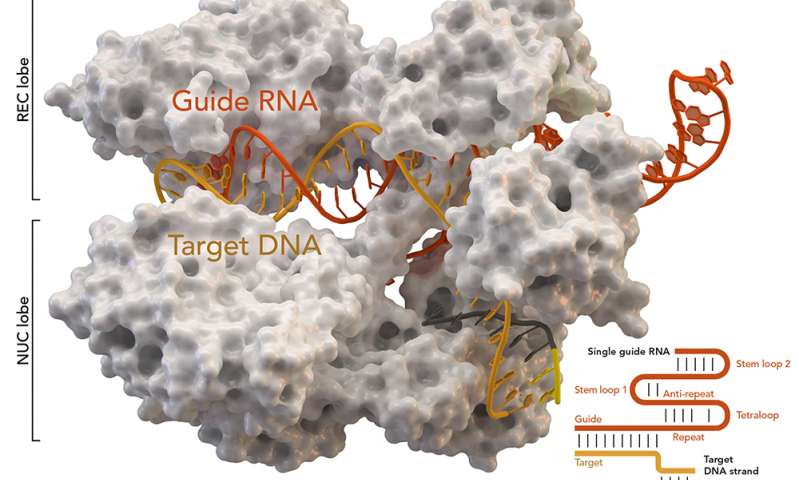
In recent years, researchers have been committed to targeted therapy for triple-negative breast cancer (TNBC); the road has been full of thorns, but they have never given up. Recently, scientists finally saw new dawn in the gene editing field for treating triple-negative breast cancer: a targeted CRISPR gene editing system can successfully stop the growth of TNBC tumors in vivo, safely and harmlessly, opening up a new landscape for the treatment of triple-negative breast cancer.
When it comes to breast cancer genes, the first to come to mind are the star genes HER2 and BRCA1/2. What is little known is that in triple-negative breast cancer, a gene called Lipocalin 2 is the real king. The small-molecule lipid carrier protein Lipocalin-2 (LCN2), as a downstream target gene directly regulated by HIC1 (a tumor suppressor of triple-negative breast cancer), plays an important role in mediating breast cancer invasion and metastasis.
In the serum of breast cancer patients before surgery, LCN2 shows a highly secreted state in triple-negative breast cancer. It appears that the secreted small-molecule protein LCN2 may activate the downstream AKT signaling pathway through the NGALR receptor, thereby promoting breast cancer invasion and metastasis. The HIC1-LCN2 axis can serve as a specific molecular subtype prognostic marker, providing an attractive candidate target for the treatment of triple-negative breast cancer.
With the target identified, how to delete it? The researchers thought of the CRISPR system. It is undeniable that since its emergence, CRISPR's success has been unstoppable: less than a year after the use of CRISPR/Cas for gene editing began, people achieved the correction of genetic diseases with this system. From basic biological research to applied fields such as plant breeding and new drug development, it has been widely used. However, due to the lack of an effective CRISPR delivery system, its performance in the field of cancer treatment has been mediocre. Through continuous exploration, people have found two ways to improve CRISPR delivery efficiency: one is delivery using viruses as vectors, which is limited by vector capacity and significant toxic side effects; the other is encapsulating the CRISPR system in cationic polymers or lipid nanoparticles for delivery. In this study, researchers at Boston Children's Hospital chose the latter and improved it: they encapsulated the CRISPR editing system in a soft "nanogel" composed of non-toxic fat molecules and hydrogel, attached antibodies to the gel surface, and guided the CRISPR nanoparticles to the location of tumor cells by recognizing and localizing ICAM-1 (a drug target of triple-negative breast cancer).
The soft "nanogel" is more aggressive and penetrating: while harder nanoparticles are captured by normal cells of the body, soft particles fuse with the tumor cell membrane and deliver the CRISPR payload directly into the cell. Once inside the cell, the CRISPR system destroys and knocks out Lipocalin 2.
In this study, the delivery success rate of the improved CRISPR gene editing system reached as high as 81%. In further experiments in mouse models, it successfully stopped the growth of tumor cells in 77% of triple-negative breast cancer mice.
Experiments showed that the loss of the oncogene inhibited the invasive behavior of tumor cells. Moreover, triple-negative breast cancer mice injected with the soft nanogel-encapsulated CRISPR editing system showed no obvious discomfort, further confirming the safe and harmless effect of the improved version and advancing the drug development process!
This study broke the deadlock in targeted therapy for triple-negative breast cancer and provided a theoretical basis for its treatment. In future research, the researchers will continue in-depth animal experiments to advance the improved CRISPR system to clinical use as soon as possible.
Reference: Peng Guo, Jiang Yang, Jing Huang, Therapeutic genome editing of triple-negative breast tumors using a noncationic and deformable nanolipogel. Source: Translational Medicine Network.

About Reforgene
Reforgene Medicine is one of China's leading innovative gene editing drug companies, driven by gene editing technology and dedicated to bringing novel medicines to life. The company has pipeline programs across genetic diseases and complex diseases. Its innovative beta-thalassemia medicine has achieved globally leading clinical progress, and it achieved the world's first cure of an alpha-thalassemia patient.
Media Contact
info@reforgene.com · BD@reforgene.com