A new CRISPR tool explores 90% of the gene editing landscape
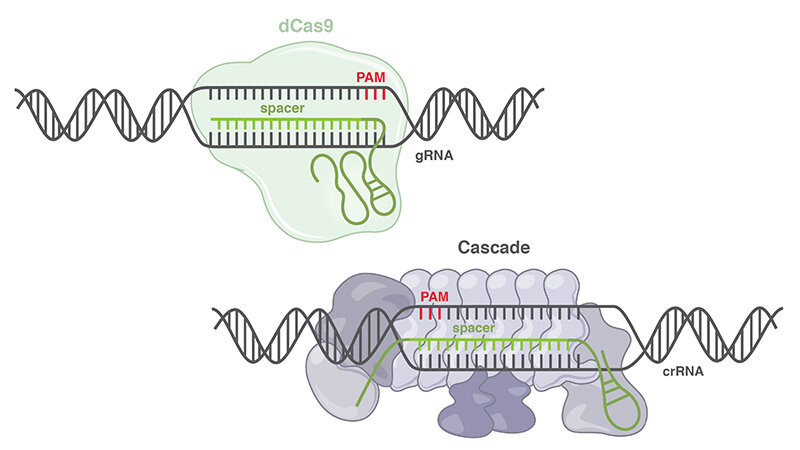
Class 2 CRISPR-Cas systems, such as Cas9 and Cas12, have been widely used to target DNA sequences in eukaryotic genomes. However, Class 1 CRISPR-Cas systems, which represent 90% of all CRISPR systems in nature, remain undeveloped for genome engineering applications. Biomedical engineers at Duke University have used this previously unexplored CRISPR technology to precisely regulate and edit genomes in human cells. Through this new approach, the researchers hope to greatly expand the tools available to CRISPR-based biomedical engineers and open a new, diverse frontier for genome engineering technology.
The study was published in Nature Biotechnology on September 23. Charles Gersbach, Associate Professor of Biomedical Engineering in the Rooney Family at Duke University, and Adrian Oliver, a postdoctoral researcher in the Gersbach laboratory, led the study (link: https://doi.org/10.1038/s41587-019-0235-7).
CRISPR-Cas is a defense system in which bacteria use RNA molecules and CRISPR-associated (Cas) proteins to target and destroy the DNA of invading viruses. The discovery of this phenomenon and the repositioning of its molecular mechanism triggered a genome editing revolution, as researchers learned how to use this tool to specifically target and edit DNA in human cells.
CRISPR-Cas9 is the most commonly used genome editing tool today and is classified as a Class 2 CRISPR system. Class 2 systems are less common in the bacterial world, but in theory they are easier to manipulate because they rely on only one Cas protein to target and cut DNA.
Class 1 systems are not so simple: they rely on multiple proteins working together in a complex called Cascade (CRISPR-associated complex for antiviral defense) to target DNA. After binding, Cascade recruits the Cas3 protein that can cut DNA.
Professor Gersbach said: "Looking at individual CRISPR systems from all bacteria in the world, nearly 90% are Class 1 systems. CRISPR-Cas is an incredible source of biotechnology tools, yet until now, people have only focused on a small fraction of it."
To demonstrate the function of Class 1 systems, Dr. Oliver attached gene activators to specific sites of the Type I E. coli Cascade complex and targeted the system to gene promoters that regulate gene expression levels. Because no Cas3 protein was added in her experiments, no DNA was cut and the underlying DNA sequence was not altered. The experiments showed that the Cascade activators could not only bind to the correct sites and raise the levels of target genes, but their accuracy and specificity were comparable to CRISPR/Cas9.
Oliver repeated the process using a Class I Cascade complex from another bacterial strain, which acted strongly at various target sites. She also showed that the activation domain could be replaced with a repressor, thereby turning off the target gene. The researchers again noted that the accuracy and specificity of the method were comparable to CRISPR/Cas9.
Oliver said: "We found that the structure of Cascade is very modular and can attach activators or repressors at multiple positions, which is an important tool for changing gene expression in human cells. The flexibility of Cascade will make it a promising genome engineering technology."
Barrangou, a renowned professor of probiotic research at North Carolina State University, spoke highly of this research: this work and the technology it produced are an excellent example of the highly innovative and productive interdisciplinary and cross-university collaboration in the North Carolina Research Triangle.
At present, the team is optimistic about their research and that of other researchers in the field, and this move will also inspire new research on Class 1 CRISPR systems. Gersbach said: "The purpose of this project is to explore the diversity of CRISPR systems. Over the past decade, there have been thousands of papers on CRISPR-Cas9, but we keep learning new things about it. Through this study, we have applied this way of thinking to the other 90%."
So far, the team has demonstrated that these Class 1 systems are comparable to CRISPR-Cas9 in accuracy and application. For future research directions, they will further explore the differences between these systems and their Class 2 counterparts, and how these differences can be effectively applied in biotechnology.
The team is also interested in studying how Class 1 systems address the general challenges of CRISPR-Cas research, especially those that complicate potential therapeutic applications, such as immune responses to Cas proteins and the use of multiple types of CRISPR simultaneously to achieve different genome engineering functions. Gersbach said: "We know CRISPR may have a major impact on human health. But we are still at the beginning of understanding how to use CRISPR, what it can do, and which systems we can use. We hope this new tool will support new frontiers in genome engineering."
References: [1] New CRISPR class expands genetic engineering toolbox [2] Targeted transcriptional modulation with type I CRISPR-Cas systems in human cells. Source: 生物探索.

About Reforgene
Reforgene Medicine is one of China's leading innovative gene editing drug companies, driven by gene editing technology and dedicated to bringing novel medicines to life. The company has pipeline programs across genetic diseases and complex diseases. Its innovative beta-thalassemia medicine has achieved globally leading clinical progress, and it achieved the world's first cure of an alpha-thalassemia patient.
Media Contact
info@reforgene.com · BD@reforgene.com