PNAS: a new SaCas9-HF variant improves CRISPR-Cas9 gene editing precision
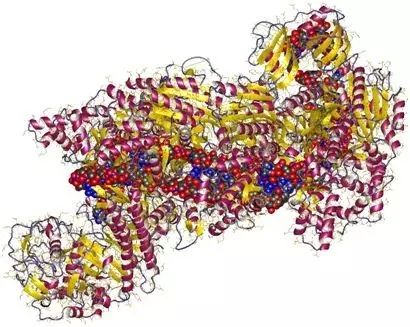
In a new study, researchers from City University of Hong Kong developed a new variant of the CRISPR-Cas9 gene editing technology that has the potential to improve the precision of gene editing during human gene therapy. Compared with wild-type CRISPR-Cas9, this new variant reduces unintended changes in DNA, indicating that it may play a role in gene therapies that require high precision. The related research results were recently published in PNAS under the title "Rationally engineered Staphylococcus aureus Cas9 nucleases with high genome-wide specificity".
Image from Mulepati, S., Bailey, S.; Astrojan/Wikipedia/CC BY 3.0. CRISPR-Cas9 is an enzyme first discovered in bacteria that can be programmed to cut and repair DNA at precise genomic sites, and is therefore called "molecular scissors". It can be used to correct defective DNA strands and is currently being tested in clinical trials for fighting cancer, blood diseases and inherited blindness. The technology is considered to have the potential to treat thousands of human genetic diseases.
However, in its current form, CRISPR-Cas9 faces some challenges. As one version, the Cas9 nuclease from Streptococcus pyogenes (SpCas9) has high target precision, but it is too large for the viral vectors needed to deliver the CRISPR-Cas9 gene editing system into cells. As another version, the Cas9 nuclease from Staphylococcus aureus (SaCas9) is much smaller, so it can be easily loaded into the adeno-associated virus (AAV) vector that delivers this gene editing system, but it lacks the same high precision as SpCas9. Imprecise gene editing may eventually edit DNA at unintended locations, potentially causing serious consequences.
In this new study, the researchers identified a genetically engineered variant named SaCas9-HF, which can significantly improve gene targeting accuracy at 24 genomic sites in human cells in a laboratory setting. For highly similar gene sequences, SaCas9-HF reduced off-target activity by about 90%, whereas wild-type SaCas9 often leads to unintended editing. For gene sequences that typically have fewer editing errors, SaCas9-HF has almost undetectable off-target activity.
Dr. Zongli Zheng of City University of Hong Kong said: "Our findings provide an alternative to wild-type Cas9 tools, to be used when highly precise genome editing is required. This new nuclease is particularly useful for future gene therapies that use AAV for in vivo delivery of genome editing components."
Research on more genomic sites and cell types is still needed to determine whether SaCas9-HF has equally high gene editing precision in different cell types. Of course, the researchers are optimistic about its application in many other cell types.
According to the researchers, in terms of the efficiency of Cas9 editing at the genomic sites of interest, SaCas9-HF has an average on-target editing efficiency of 80% compared with wild-type Cas9. In some cases, 10% CRISPR-Cas9 gene editing efficiency is sufficient to repair damaged gene sequences and restore their function.
References: 1. Yuanyan Tan et al. Rationally engineered Staphylococcus aureus Cas9 nucleases with high genome-wide specificity. PNAS, 2019, doi:10.1073/pnas.1906843116. 2. New CRISPR-Cas9 variant may boost precision in gene editing https://phys.org/news/2019-09-crispr-cas9-variant-boost-precision-gene.html. This article is reproduced from 生物谷.

About Reforgene
Reforgene Medicine is one of China's leading innovative gene editing drug companies, driven by gene editing technology and dedicated to bringing novel medicines to life. The company has pipeline programs across genetic diseases and complex diseases. Its innovative beta-thalassemia medicine has achieved globally leading clinical progress, and it achieved the world's first cure of an alpha-thalassemia patient.
Media Contact
info@reforgene.com · BD@reforgene.com