Crossing the blood-brain barrier: a novel delivery technology for Parkinson's gene therapy
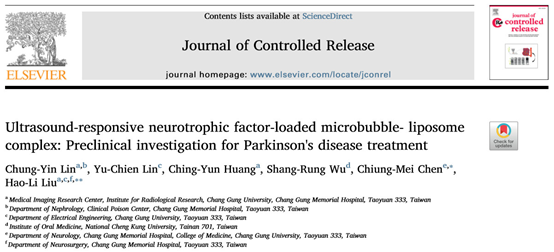
Recently, a study in mice showed that a new technique using microbubbles and ultrasound can facilitate the delivery of gene therapy to the central nervous system. The study found that the technique has neuroprotective effects in mice, and that treated Parkinson's disease mouse models showed improvement in motor function measurements. The study was published in the Journal of Controlled Release.
A novel delivery strategy breaks through the blood-brain barrier
Parkinson's disease (PD) is a common neurodegenerative disease characterized by the loss of dopamine-producing neurons in the brain, and is the second most common chronic progressive neurodegenerative disease after Alzheimer's disease. Clinically, it presents with motor symptoms such as resting tremor, increased muscle tone, bradykinesia and postural balance disorders, as well as non-motor symptoms such as reduced sense of smell and sleep disorders.
One treatment strategy that has been proposed is the use of neurotrophic factors, signaling molecules that promote the growth and survival of neurons. For example, glial cell-derived neurotrophic factor (GDNF) and brain-derived neurotrophic factor (BDNF) are both proteins encoded by genes of the same names.
In theory, these factors can be delivered through gene therapy. In essence, this involves delivering genes to nerve cells in the brain so that they produce more of the proteins, thereby achieving a therapeutic effect. However, using gene therapy targeting brain nerve cells has a problem: the blood-brain barrier, which, as its name implies, blocks many substances from entering the central nervous system from the blood. While this helps protect the fragile nervous system from damage and infection, it makes the brain difficult to treat, because it is hard for therapeutic compounds (such as gene therapies) to pass through this semi-permeable barrier.
Therefore, the researchers developed a new gene therapy technique to overcome this obstacle, relying on microbubbles less than one hundredth of a millimeter in diameter. A relevant gene is inserted into a liposome, a small vesicle made of lipids, which in turn attaches to the microbubbles, forming a liposome-microbubble complex that is then injected into the blood. Targeted ultrasound is then applied; when the sound waves of the ultrasound hit the microbubbles, they vibrate in such a way that they physically push against the blood-brain barrier, creating gaps that facilitate the entry of the gene therapy into the brain.
The researchers tested their system by delivering GDNF, BDNF, or both to mice, both healthy mice and mice treated with the neurotoxin MPTP, which is commonly used to establish a model of Parkinson's disease. This delivery method significantly increased the levels of the corresponding proteins in the mice's brains. The increase only appeared when both microbubbles and ultrasound were used; no increase was observed in experiments without these approaches. This shows that the system functions as expected.
In the Parkinson's mouse model, GDNF or BDNF gene therapy increased the production of dopamine and related molecules while reducing the death of dopamine-producing nerve cells. The treated mice also showed significant improvement in multiple motor function tests.
The combined use of GDNF and BDNF did not yield greater benefits than either alone. The researchers believe this may be because placing the two genes in the same therapy, as done in the experiment, may separately limit the production of the two proteins. They wrote: "In the case of GDNF/BDNF gene co-expression, a potential consequence is that neither GDNF nor BDNF gene expression levels can reach therapeutic levels."
Further research may optimize this system to explore in more detail how these neurotrophic factors may or may not act synergistically. Overall, this study demonstrates the potential of a new gene therapy strategy for delivering treatments to the brain.
The researchers said: "Our results show that both GDNF and BDNF gene vectors are associated with greater behavioral correction and dopaminergic neuron protection." They also added: "The system has a neuroprotective effect on damaged neurons. These results indicate that the proposed UTMD (ultrasound-targeted microbubble destruction) gene delivery system is a valuable tool for developing strategies to treat neurodegenerative diseases."
Gene therapy: a promising treatment strategy for Parkinson's disease
One of the emerging therapies for treating PD is the use of gene therapy to deliver key proteins in dopamine metabolism directly to the basal ganglia. Multiple clinical trials of gene therapy for PD have been reported, including symptomatic treatment and disease-modifying treatment.
Symptomatic treatment increases dopamine production by transducing genes involved in neurotransmitter synthesis, aiming to improve clinical symptoms without changing the disease process, including in vivo transfer of the aromatic L-amino acid decarboxylase (AADC) gene, the glutamic acid decarboxylase (GAD) gene, and the tyrosine hydroxylase (TH)-AADC-guanosine triphosphate cyclohydrolase (GCH) genes. Disease-modifying treatment attempts to restore the function of dopamine-producing neurons affected by the disease process, including in vivo transfer of the two neurotrophic factor genes, glial-derived neurotrophic factor (GDNF) and Neurturin.
Although gene therapies for PD are still in the clinical trial stage and no product has yet received regulatory approval for clinical use, and the pathogenesis of PD is very complex with the molecular mechanisms leading to neuronal death not yet fully clarified, many researchers believe gene therapy has the promise of becoming a new class of drugs for PD. At present, most large pharmaceutical companies have scaled back or withdrawn from research on central nervous system disease drugs, but some companies are still committed to this exploration.
Recently, the Phase 1/2 PROPEL trial of PR001 (AAV9), a one-time gene therapy developed by Prevail Therapeutics, is underway at two centers in New York, evaluating the safety, tolerability and early efficacy of PR001 in treating Parkinson's disease associated with GBA1 gene mutations, with preliminary interim results expected to be announced in the second half of 2020. This first-in-human study of PR001 (NCT04127578) is expected to enroll 16 patients with moderate to severe Parkinson's disease and confirmed GBA1 mutations.
People carrying GBA1 mutations have up to a 5-fold higher risk of developing Parkinson's disease; in fact, it is estimated that 7-10% of Parkinson's cases are associated with GBA1 mutations. PR001 uses AAV9 as the vector to provide nerve cells with a complete working copy of the GBA1 gene. It is worth noting that the U.S. FDA granted PR001 Fast Track designation in July 2019 for the treatment of patients with Parkinson's disease associated with GBA1 gene mutations.
On February 28, Biogen and the gene editing technology company Sangamo Therapeutics reached a global exclusive collaboration agreement worth a total of USD 2.72 billion to jointly develop gene therapies for neurodegenerative diseases. The two companies will use Sangamo's proprietary zinc finger protein (ZFP) technology to regulate the expression of key genes related to neurological diseases through adeno-associated virus (AAV).
Under the agreement, Biogen obtains global exclusive rights to two of Sangamo's preclinical-stage products (ST-501, ST-502) and one neuromuscular disease program with an undisclosed target. ST-501, based on an AAV vector targeting the tau protein, is being developed for the treatment of tauopathies including Alzheimer's disease; ST-502, based on an AAV vector targeting alpha-synuclein, is being developed for the treatment of synucleinopathies including Parkinson's disease.
In addition, Biogen has the exclusive option over the next five years to designate up to nine undisclosed neurological disease targets for collaborative development, with Sangamo responsible for early discovery work and the two sides sharing costs, after which Biogen will be responsible for the IND, clinical development, registration approval and commercialization of these programs.
Biogen continues to bet USD 350 million on neurodegenerative diseases, jointly developing AAV-based gene regulation therapies with Sangamo.
Breaking through the blood-brain barrier: the vector matters
Transferring the target gene into target cells requires the selection of an appropriate vector, and research on vectors is currently receiving increasing attention. Vectors for gene transfer mainly include viral vectors and non-viral vectors. Adeno-associated virus and lentiviral vectors are the only vectors that have been used in clinical gene therapy trials for the central nervous system. Effective targeted gene delivery is complex, because gene vectors find it difficult to penetrate the blood-brain barrier, so clinical trials must rely on invasive intracerebral gene vector injection.
Studies show that non-viral vectors, especially multifunctional microbubbles, provide another option for gene delivery, because microbubbles can selectively aggregate in target areas through modification of the microbubble shell. In addition, the physical structure of microbubbles allows them to release internalized genes in the region of interest when triggered by focused ultrasound. Studies have found that the combination of focused ultrasound and microbubbles can non-invasively, locally and reversibly open the blood-brain barrier. The emergence of this technology provides a new non-invasive treatment approach for gene therapy of PD, and may become a feasible new technology for treating central nervous system diseases.
Reference sources: 1. https://doi.org/10.1016/j.jconrel.2020.02.044 2. https://parkinsonsnewstoday.com/2020/03/04/new-gene-therapy-technique-gets-past-blood-brain-barrier-mouse-study-shows/ 3. https://parkinsonsnewstoday.com/2020/03/09/enrollment-propel-trial-prevail-gene-therapy-pr001-ongoing-patient-dosing-continuing/ Source: 医麦客.

About Reforgene
Reforgene Medicine is one of China's leading innovative gene editing drug companies, driven by gene editing technology and dedicated to bringing novel medicines to life. The company has pipeline programs across genetic diseases and complex diseases. Its innovative beta-thalassemia medicine has achieved globally leading clinical progress, and it achieved the world's first cure of an alpha-thalassemia patient.
Media Contact
info@reforgene.com · BD@reforgene.com