Interview: gene editing technology is opening a new class of medicines
Medical Mackerel | Earlier this month, Reforgene announced the completion of a Series A financing round of nearly 100 million RMB. As a leading gene editing therapy company with core technology and intellectual property, Reforgene said the funds will be used to continue advancing the R&D progress of its existing innovative therapies and to accelerate technology iteration and talent system development. Recently, a reporter from Medical Mackerel's "Peak Interview" interviewed Dr. Liang Junbin, CEO of Reforgene, who shared his views and unique insights on gene editing.
Interview transcript
Reporter: As a serial entrepreneur, why did you decide to found Reforgene to pursue the translation of gene editing technology?
Liang Junbin: Fundamentally, I think it was my basic understanding of the development of the gene field that drove me to do this. From graduate school to subsequent work, I have never left the field of gene research and application. My first startup was in the development and industrialization of NGS technology; I personally experienced and witnessed the prosperity and sustained growth of the genomics industry, and it has achieved great success in clinical translation applications. Gene technology will inevitably go through three development stages: reading, rewriting and designing, corresponding to gene sequencing, gene editing and synthetic biology.
In 2013, I noticed that Zhang Feng's team had applied the CRISPR/Cas9 gene editing system to eukaryotic cells with extremely high efficiency, and I felt that this new generation of gene editing technology could become a core tool for future drug R&D. Based on my own interest and my sense of the development of the gene industry, I have also been following the progress of gene editing, gaining a deep understanding of its technological development and application. Therefore, when preparing for a new startup, I decided to join this technological wave, believing that the progress of gene editing technology will shape a brand-new biomedical landscape. It is not only a technical tool, but also a drug itself.
Reporter: Founding a company often faces the biggest challenge of initial team building. Did Reforgene's team building go smoothly?
Liang Junbin: As a serial entrepreneur, I have a relatively systematic grasp of all aspects of a company's start-up and development. Team building went relatively smoothly, as team members all saw the development of gene editing technology and its value as a drug. Gene editing is ultimately a molecular biology technology, so when considering team building, I believed this was an important foothold to truly build an innovation company driven by technology. It happened that our combination had this: integrating domestic and international academic training backgrounds and industrial practice capabilities. Among the team, Professor Huang Junjiu has deep accumulation and an academic record in the gene editing field, and was named one of Nature's top ten scientific figures of 2015. I myself have experience managing companies, so we were relatively fortunate; this combination laid a solid technical foundation for the company. At present, we are continuing talent and organizational development, attracting more talent experienced in drug R&D and registration.
Reporter: Can you introduce Reforgene's growth path in detail?
Liang Junbin: Reforgene is still very young; it was established in Guangzhou in early 2019, focusing on innovative drug development centered on gene editing technology. In terms of indications, we first started with beta-thalassemia and have now expanded to multiple other disease systems. We have gone through two rounds of financing, including early angel investment and the recently completed new round. In terms of team, we have expanded from the initial founding team to a mature team covering early R&D, pharmaceutical platforms, production and quality systems, attracting talent from pharmaceutical companies, biotech companies and overseas research institutions. It will further expand as R&D advances.
Reporter: How does Reforgene lay out its product pipeline? What is the current progress of each pipeline?
Liang Junbin: In pipeline layout, we are based on our understanding of the characteristics of gene editing technology, while also considering the feasibility of commercialization, and on this basis we make curative medicines rather than palliative medicines, targeting unmet disease treatment needs. Gene editing is an underlying technology with very good universality. Therefore, our pipeline includes genetic diseases and high-incidence serious diseases. The pipeline currently covers indications in the blood system, ophthalmology and respiratory system. The beta-thalassemia gene editing therapy is progressing relatively fast, and we expect to file for IND next year; other pipelines have made good progress at the cellular, animal and process levels.
Reporter: What difficulties, challenges and common problems does gene editing still face? What innovations and solutions does Reforgene have? What experience and insights can you share?
Liang Junbin: Medicines ultimately cannot escape safety and efficacy. Gene editing medicines are new things and still need cautious exploration. There are many challenges, including two at the technical level: vectors and off-target. The vector issue is the same challenge as traditional gene therapy, mainly for in vivo treatment, including delivery efficiency, specificity and expression persistence. There are two major types of biological and chemical vectors, with AAV involved more; at this level we will combine our own R&D with external cooperation. This is a technical challenge faced by the whole industry and requires joint efforts. On the off-target issue, including the design of the entire editing system, the selection of editing parameters, and quality method evaluation, technical support is needed, as well as a lot of accumulated experience, combining molecular, cellular and genomic technical capabilities. For specific application scenarios, the off-target problems caused by transient expression can be continuously optimized and solved, while the problems brought by long-term expression of the editing system still have relatively little accumulation in industry and academia. Overall, gene editing medicines are special in that they change target gene sequences, so solutions must first be sought at the gene level. I think both data science and experimental science need to be considered. We have built a digital drug development platform ourselves, combining genomics and informatics, and part of our energy is devoted to this.
Reporter: Reforgene has TIPBAIG™, the digital drug development platform. What are its features and advantages? What are the future prospects and positive significance of this technology?
Liang Junbin: I think an important trend in drug R&D is informatization and digitalization. Medicine has evolved from ancient Chinese herbal medicine to today's gene and cell therapies, from qualitative to precise quantitative. TIPBAIG™ is a drug innovation platform driven by genomics and informatics technology, reflecting a new form of drug R&D. We did this based on the essential characteristics of gene editing technology. Unlike other drugs, it has an extremely simple drug development logic: acting on gene-level targets, directly changing the underlying code of life. The understanding of genes lets us know that this characteristic can be digitally described, and its drug development strategy can be intuitively simulated and presented on computers, without even requiring the costly compound screening of chemical drugs. The TIPBAIG™ digital platform is also being continuously improved, and can carry out innovation and optimization of gene editing systems, comparison of drug development strategies, and on-target and off-target research. I believe information platforms will gradually become an inevitable tool for drug development, with the opportunity to solve the pain points of time and economic cost in drug R&D.
Reporter: Domestic CRISPR competition is becoming increasingly fierce. Recently, the IND of China's first gene editing drug was accepted by the NMPA. What do you think of future trends?
Liang Junbin: First, congratulations to the EdiGene team on obtaining the IND acceptance of China's first gene editing drug. This also shows the regulators' support for innovation in this drug direction. Gene editing technology is opening up a brand-new drug field and is still in an early stage; it is too early to talk about competition. Rather, more enterprises are needed to participate in promoting industry development, reaching industry consensus, and helping regulators improve regulations and guidelines. Gene editing will be applied to more and more indications. In particular, drugs for fatal or disabling genetic diseases and lethal malignant tumors can greatly change the fate of a family. In addition, gene editing technology will also be very valuable for R&D across the drug industry, making the drug target discovery process faster and time-saving. On the other hand, there is still much uncertainty in the development of the gene editing drug industry, and the upstream and downstream support of the industry is also insufficient and needs time to improve.
Reporter: What impact will gene editing winning the Nobel Prize in Chemistry have on global new drug R&D?
Liang Junbin: This Nobel Prize in Chemistry has focused everyone's attention on gene editing, which will greatly promote related scientific research, clinical translation and industrialization. We also firmly believe that this technology will bring a paradigm shift to the pharmaceutical industry.
About Reforgene
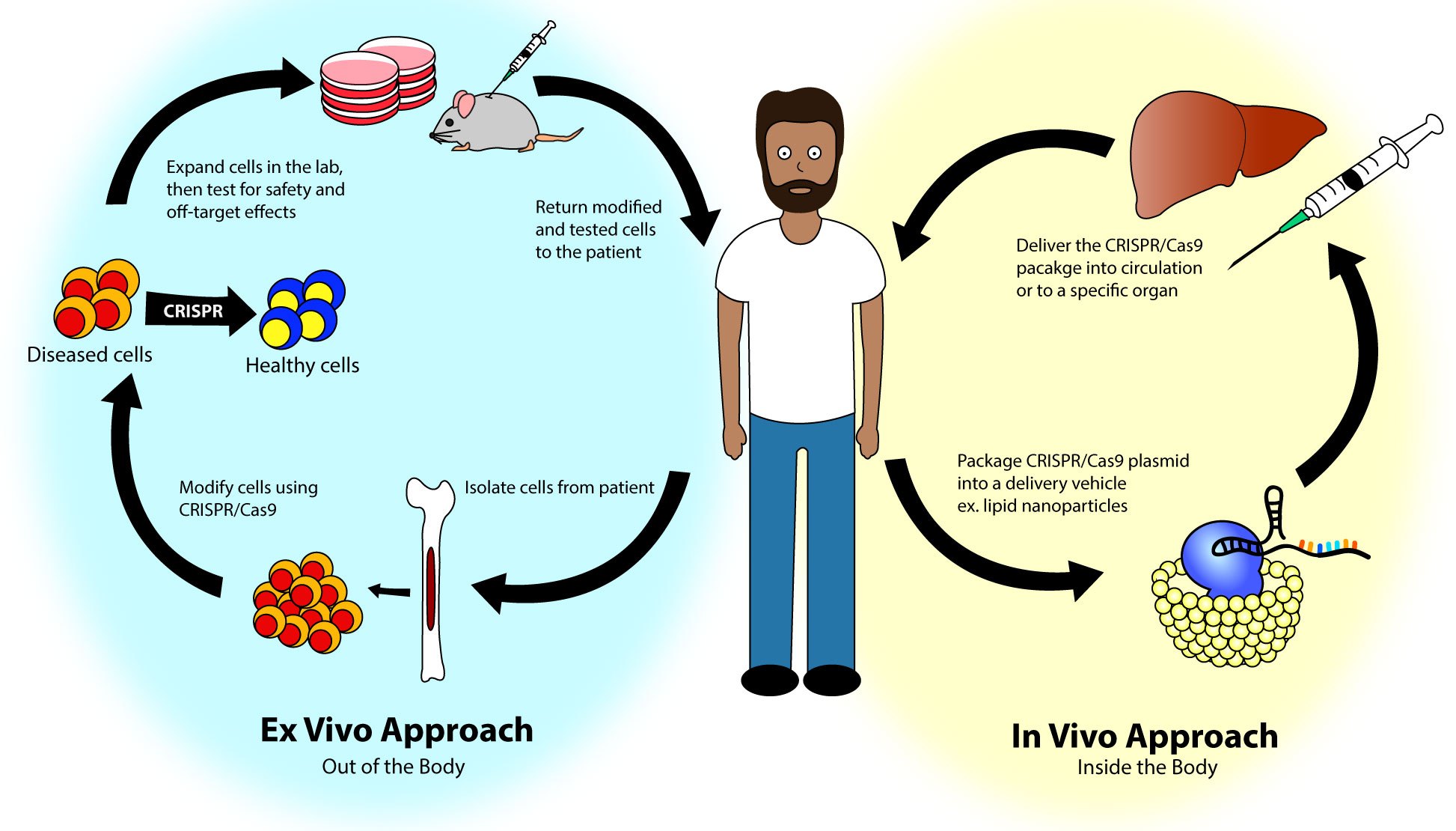
Reforgene is one of China's leading gene medicine companies, driven by gene editing technology and dedicated to bringing novel medicines to life. Its team includes internationally renowned scientists in the gene editing field and returning scholars with research experience at top overseas clinical research institutions, as well as entrepreneurs with successful experience in the gene industry and senior managers of multinational pharmaceutical companies. It is one of the earliest teams internationally to apply gene editing to explore the treatment of genetic diseases, and has continuously accumulated pioneering achievements in hematology, ophthalmology and other disease directions, with high-level technical accumulation in gene editing tool innovation, drug development strategy analysis, novel animal model construction, and multi-level efficacy and safety assessment, operating both in vivo and ex vivo drug development. Reforgene's mission is to deliver accessible, curative medicines for patients with serious diseases based on revolutionary gene editing technology.
About YuanSheng Capital
YuanSheng Capital is an investment institution focused on early-stage and growth-stage healthcare, based in Suzhou bioBAY and radiating globally. It currently manages about 6 billion RMB and has completed investments in more than 100 quality projects, mainly involving new drug development, medical devices, in vitro diagnostics and medical services, achieving rich investment returns, and has been repeatedly selected as a Top 10 VC fund in China's healthcare field and China's most active healthcare investment institution. YuanSheng Capital brings together a team of senior professional investors and world-class scientific advisors, with rich entrepreneurial, venture capital and corporate operation experience in biomedicine and other industries. Through focus and rich industry resources, YuanSheng Capital aspires to become one of China's most successful healthcare venture funds.
About Sinovation Ventures
Sinovation Ventures was founded by Dr. Kai-Fu Lee in September 2009 as a technology-focused venture investment institution, aiming to help young Chinese entrepreneurs build world-class companies through comprehensive entrepreneurial services, managing dual-currency funds totaling about 17.5 billion RMB. As a top international service-oriented venture investment institution, Sinovation Ventures focuses on artificial intelligence and hard technology, robotics and automation, chips/semiconductors, enterprise service software and healthcare, specializing in early- and mid-stage high-growth technology companies. To date, it has invested in about 400 projects, nurturing more than 20 unicorn companies. Sinovation Ventures pioneered the "technology investment plus artificial intelligence" model; in September 2016, it established the AI Engineering Institute with Dr. Kai-Fu Lee personally serving as Dean, comprehensively advancing talent cultivation, entrepreneurship, scientific research and industry integration in AI.
About BioTrack Capital
BioTrack Capital, founded in 2017, is a professional investment institution focused on investing in and incubating outstanding healthcare startups in the Chinese market. We are not only investors, but long-term partners of entrepreneurs. We support the most outstanding healthcare entrepreneurs over the long term and build a new generation of leading enterprises in China's healthcare industry.
About CMS Securities Investment
China Merchants Securities Investment Co., Ltd. is a wholly-owned alternative investment subsidiary of China Merchants Securities, with registered capital of 7.1 billion RMB, mainly engaged in equity investment and financial product investment. Guided by value investing, its equity investment focuses on opportunities in healthcare, new energy and new materials, intelligent manufacturing, technology and chips, and is committed to providing full-industry-chain financial services to portfolio companies.
About China Everbright Limited
China Everbright Limited ("CEL", stock code: 165.HK) was established in Hong Kong in 1997, with more than 20 years of cross-border asset management and private equity investment experience. It is a listed company in Hong Kong with alternative asset management as its core business, and its parent company is China Everbright Group. Through multiple private equity funds, venture funds, industrial funds, mezzanine funds, fund-of-funds, fixed income and equity funds under its management, CEL has cultivated many enterprises with high growth potential together with investors, while also meeting the development needs of Chinese enterprises by combining overseas technological advantages with the Chinese market, providing diversified financial services to Chinese and overseas investors.
About Haoyue Capital
Haoyue Capital was founded in January 2014, committed to becoming a bridge connecting China's healthcare industry and capital. Its research fields and transaction scope cover innovative medical devices, biomedicine, IVD and precision medicine, medical services, smart healthcare and other sub-fields. Its team consists of senior investment bankers deeply engaged in China's healthcare field for many years, closely tracking healthcare investment market dynamics and trends over the long term, publishing weekly healthcare investment reports and special research reports, interpreting new policies and frontiers from Haoyue's perspective.

About Reforgene
Reforgene Medicine is one of China's leading innovative gene editing drug companies, driven by gene editing technology and dedicated to bringing novel medicines to life. The company has pipeline programs across genetic diseases and complex diseases. Its innovative beta-thalassemia medicine has achieved globally leading clinical progress, and it achieved the world's first cure of an alpha-thalassemia patient.
Media Contact
info@reforgene.com · BD@reforgene.com